Recycled aggregates.
Circular economy serving your projects.
MCA offers recycled aggregates for ready-mix concrete and civil works. Reduce the carbon footprint of your projects with our on-site recycling solutions and recycled materials.
MCA Matériaux Concassés Ardennais produces recycled aggregates from inert demolition materials (concrete, asphalt, bricks, mixed inert materials). Two modes: mobile crushing-screening at the client's site (zero round-trip transport) or production at the quarry. Applications: ready-mix concrete (integration in concrete plant, up to 20-30% substitution in XC1/XC2 classes) and civil works (capping, foundation, embankments, road sub-bases). Circular economy approach aligned with the French RE2020 regulation and waste hierarchy (Environmental Code art. L541-1). Compliance with NF EN 12620 (concrete) and NF EN 13242 (civil works) standards. Internal laboratory quality control.
On-site recycling and supply of recycled materials.
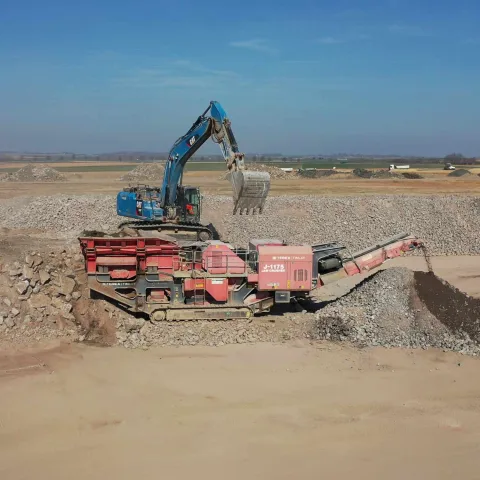
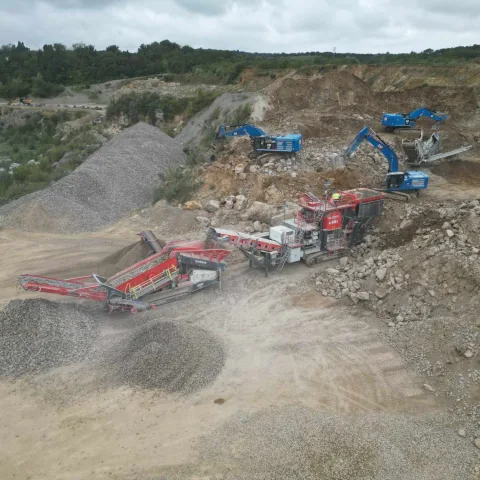
We operate with our mobile crushing-screening units directly on your sites. Inert materials are transformed into compliant recycled aggregates, reusable on site or for other projects.
- Recycled aggregates for ready-mix concrete – integration in concrete plant
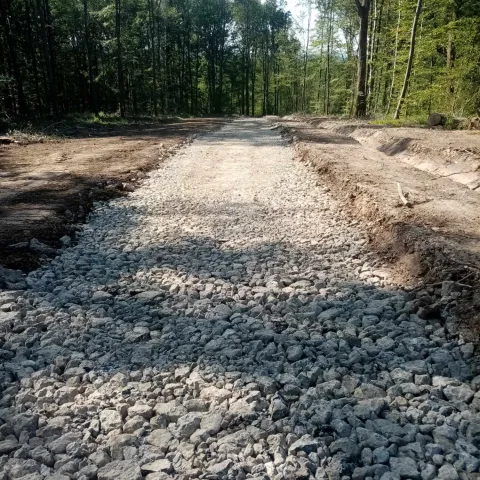
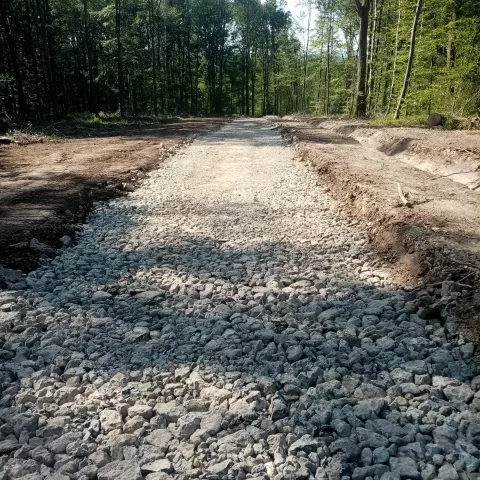
- Recycled aggregates for civil works – sub-base layers and embankments
- On-site crushing – mobile scalper-crusher-screen units
- Quality control – laboratory analyses of recycled materials
Which recycled aggregate for which incoming material?
Decision-support table based on the nature of inert materials delivered or present on site.
Non-inert materials (plaster, wood, metals, plastics, asbestos) and hazardous materials are not accepted and must be directed to specialised channels.
Reducing the carbon footprint of your projects.
Recycling demolition materials limits the extraction of natural resources and reduces transport. MCA is committed to a circular economy approach by recovering inert construction waste — a direct lever for the IC construction indicators of the French RE2020 regulation and for the national target of 70% recovery of construction waste.
Our fleet of 200 vehicles on B100 biofuel complements this approach by reducing transport emissions. Depending on the chain, the use of recycled aggregates reduces CO₂ emissions by 50 to 80% per tonne compared with natural aggregates.
Circular economy in action.
Two concrete cases of recovery of inert materials into useful aggregates.
Recycled aggregates – your questions.
What is a recycled aggregate?
A recycled aggregate is an aggregate obtained by crushing and screening inert demolition materials: concrete, bituminous asphalt, bricks, tiles, mixed inert materials. After sorting and processing, it regains the technical characteristics needed to be reused in construction (civil works, ready-mix concrete), in accordance with the NF EN 12620 (concrete) and NF EN 13242 (road bases) standards.
Which materials does MCA accept for recycling?
MCA accepts inert demolition materials: demolition concrete (with or without small-section rebar), bituminous asphalt, bricks and tiles, sorted mixed inert materials. Non-inert materials (plaster, wood, metals, plastics, asbestos-containing or hazardous materials) are excluded and must be directed to dedicated channels.
What is the difference between inert, non-inert and hazardous waste?
Inert waste (concrete, bricks, soil, rocks) does not decompose, does not burn, does not react chemically and has no significant environmental impact. Non-inert non-hazardous waste (wood, plaster, plastic) can be recovered but requires specific treatment. Hazardous waste (asbestos, lead paint, hydrocarbons) must be sent to a specialised facility (DASRI, ISDD). MCA handles only inert waste (French ICPE classification 2760-3).
What are the conditions for on-site crushing-screening at the client's premises?
MCA can deploy its mobile scalper-crusher-screen units directly at the client's site. Conditions: minimum volume justifying the mobilisation of the equipment (typically several thousand tonnes), compatible site access (platform, height, circulation), prior sorting of materials by the client. Benefits: zero round-trip transport (CO₂ and cost reduction), immediate on-site reuse of the crushed materials.
Can recycled aggregates be used in structural ready-mix concrete?
Yes, partially. The NF EN 12620 standard and the FD P18-545 technical guide frame the use of recycled aggregates in concrete. For concrete in standard exposure classes (XC1, XC2), substitution can reach 20 to 30% of the gravel depending on site conditions and mix design. For high-performance concrete or aggressive environments, use is more limited. The MCA laboratory supports concrete plants in qualifying their mix designs.
What is the carbon footprint of recycled vs natural aggregates?
Recycled aggregates have a significantly lower carbon footprint than natural aggregates: no extraction, often reduced transport (recycling at or near the site), recovery of materials that would otherwise have been landfilled. Depending on the chain, the CO₂ emissions reduction is in the range of 50 to 80% per tonne. MCA strengthens this balance with its fleet of 200 vehicles running on B100 biofuel.
Recycled aggregates and the French RE2020 / RE2025 regulations?
The French RE2020 and the upcoming RE2025 promote materials with a low carbon footprint. The use of recycled aggregates contributes directly to the IC construction indicators (product carbon impact) and to circular economy alignment (national target of 70% recovery of construction waste). For public contracting authorities, tenders increasingly include criteria on the percentage of recycled content.
What is the difference between ISDI and recovery by recycling?
The ISDI (Inert Waste Storage Facility, French ICPE classification 2760-3) receives non-recoverable inert materials for permanent storage (landfilling). Recovery through recycling transforms inert materials into useful aggregates for new projects. MCA offers both: ISDI at the Douzy and Foisches sites, and crushing-screening for recovery. Recovery is always preferable to landfilling (waste treatment hierarchy, Environmental Code art. L541-1).
A recycling project?
On-site crushing, supply of recycled aggregates. Contact us to discuss your project.